As we celebrate World Breastfeeding Week, there’s no better time to invest in the knowledge and skills that help families achieve their infant feeding goals. Whether you're supporting patients in a hospital, clinic, or community setting, having the confidence to address breastfeeding challenges can make a lasting difference.
Strengthen Your Lactation Support Skills This World Breastfeeding Week
.jpeg?width=300&height=127&name=1781715742-breastfeeding-and-basics-lg%20(1).jpeg) Breastfeeding support goes far beyond the first feeding. Families often face questions, challenges, and barriers that require knowledgeable, compassionate guidance from healthcare professionals. That's why Northwest AHEC is offering Breastfeeding Basics and Problem-Solving, a comprehensive live webinar designed to equip healthcare professionals with practical, evidence-based strategies to support breastfeeding success.
Breastfeeding support goes far beyond the first feeding. Families often face questions, challenges, and barriers that require knowledgeable, compassionate guidance from healthcare professionals. That's why Northwest AHEC is offering Breastfeeding Basics and Problem-Solving, a comprehensive live webinar designed to equip healthcare professionals with practical, evidence-based strategies to support breastfeeding success.
During this engaging training, participants will explore the foundations of breastfeeding, learn effective problem-solving techniques, and gain valuable tools for addressing common concerns such as latch difficulties, breast pain, milk supply issues, and supplementation decisions. The course is grounded in Baby-Friendly principles and emphasizes the important role healthcare professionals play in prenatal education, early initiation, and ongoing breastfeeding support.
This program is ideal for nurses, nutritionists, social workers, doulas, and other professionals who work with families during the perinatal period and want to deepen their lactation support skills. Participants can earn 5.5 contact hours, including 5.5 nursing contact hours.
Breastfeeding Basics and Problem-Solving will be held as a live webinar on October 16, 2026, from 9:00 a.m. to 4:00 p.m. EDT and will be led by Georganna Cogburn, MS, RD, LDN, IBCLC, RLC.
World Breastfeeding Week reminds us that every family deserves informed, skilled support. Join us to strengthen your practice and help improve breastfeeding outcomes in the communities you serve.
👉 Register today: https://northwestahec.wakehealth.edu/t3/courses-and-events/78559/breastfeeding-basics-and-problem-solving
 The IPR.Global SRI is a highly interactive, fully virtual program designed to support the next generation of scholars in IPECP. The institute brings together participants from around the world to build capacity in collaborative research and drive innovation in health professions education and practice.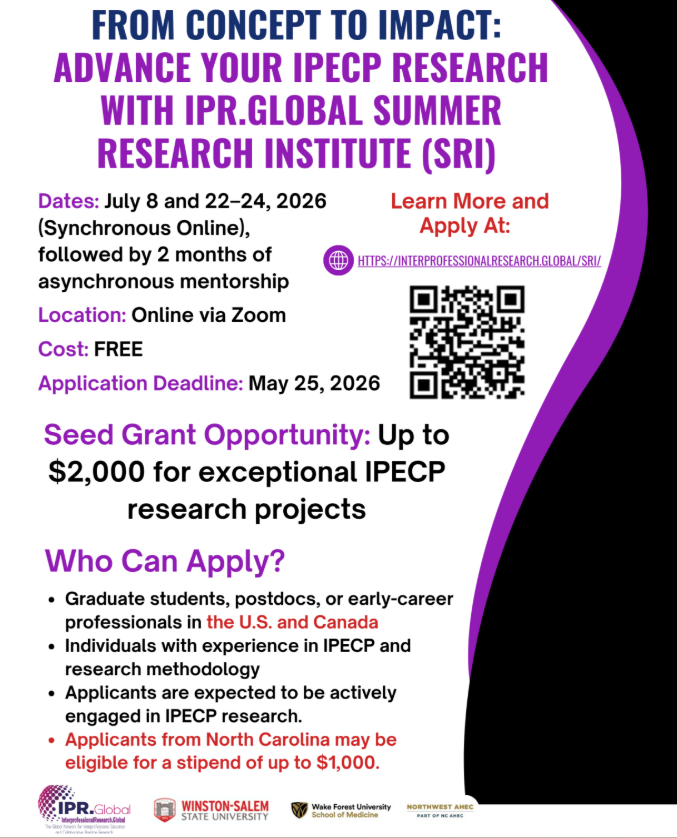
 Through guided instruction and experiential learning, participants will explore bedside-appropriate techniques such as:

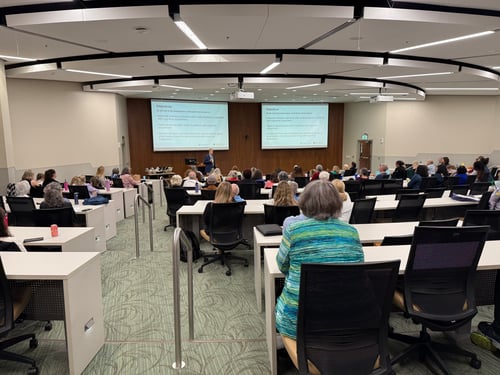
 This year’s conference brings together healthcare professionals, caregivers, community members, researchers, social service providers, and aging adults for two days of dynamic learning and collaboration.

 Northwest AHEC would like to extend our sincere thanks and appreciation to all phlebotomists for the vital role you play in health care every day. Your skill, precision, and compassion are essential to patient care and clinical decision-making. We celebrate you every week, but highlighting now since this past week was the official recognition week.